MCEq v1.4#
Welcome to MCEq v1.4, a long foreseen release!
What has changed?#
For a more detailed list please refer to the latest Changelog.
The significant changes are updates to the MCEq database!
Hadronic Interaction Models
The new database is composed of a set of baseline models (Sibyll-2.1, QGSjetII04, Epos-LHC),to provide a comparison between MCEq v1.3 and v1.4, as well as a set of new models (Sibyll-2.3d, Sibyll-2.3e, QGSjetIII, DPMJetIII-19.3, Epos-LHC-R).All hadronic interaction yields in the database have been updated.Decay Yields
The calculation of decay yields moved completly to the Pythia interface of chromo.Cross Sections
All cross sections are updated to production cross sections of the particle of interest.
Baseline Comparison#
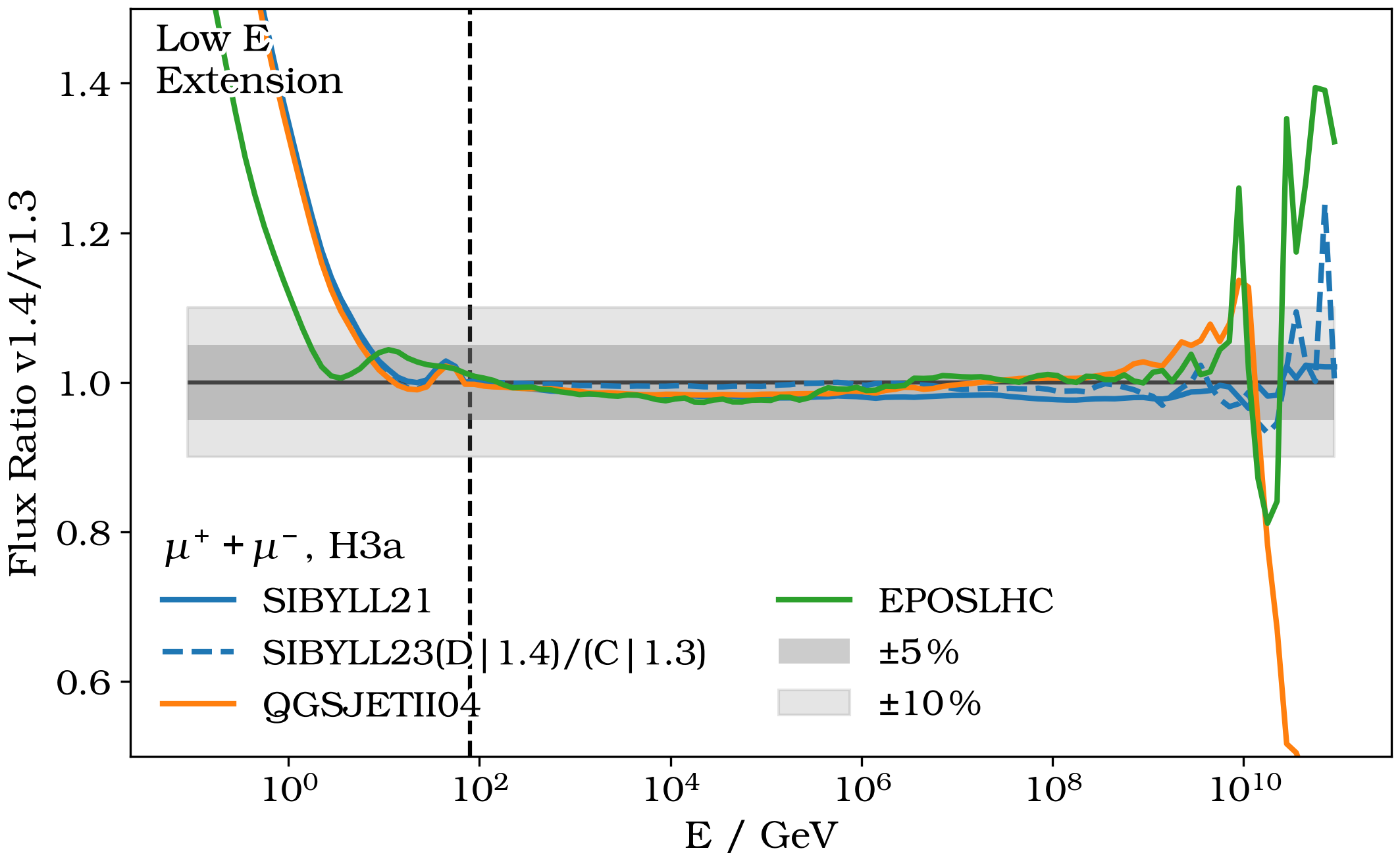
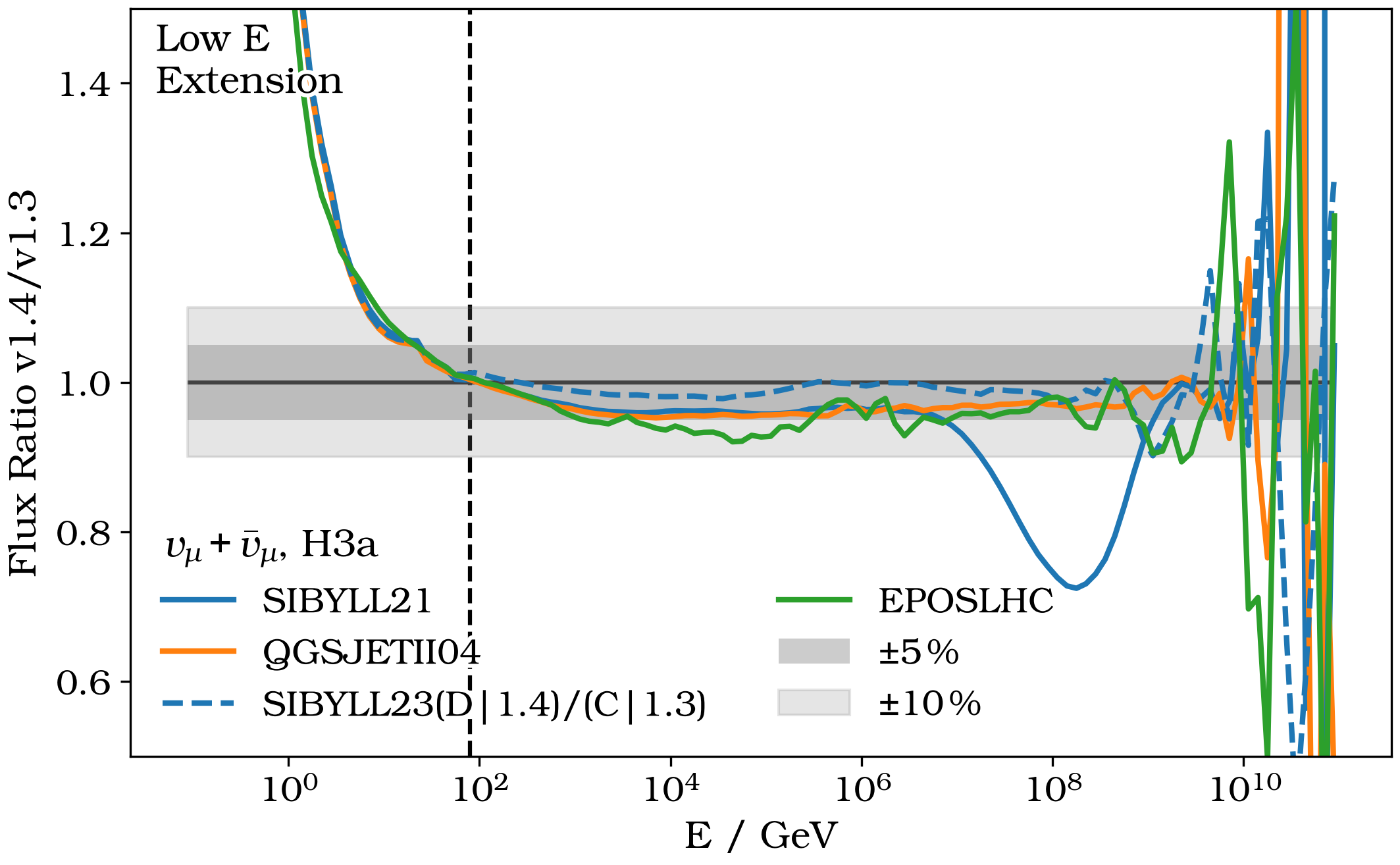
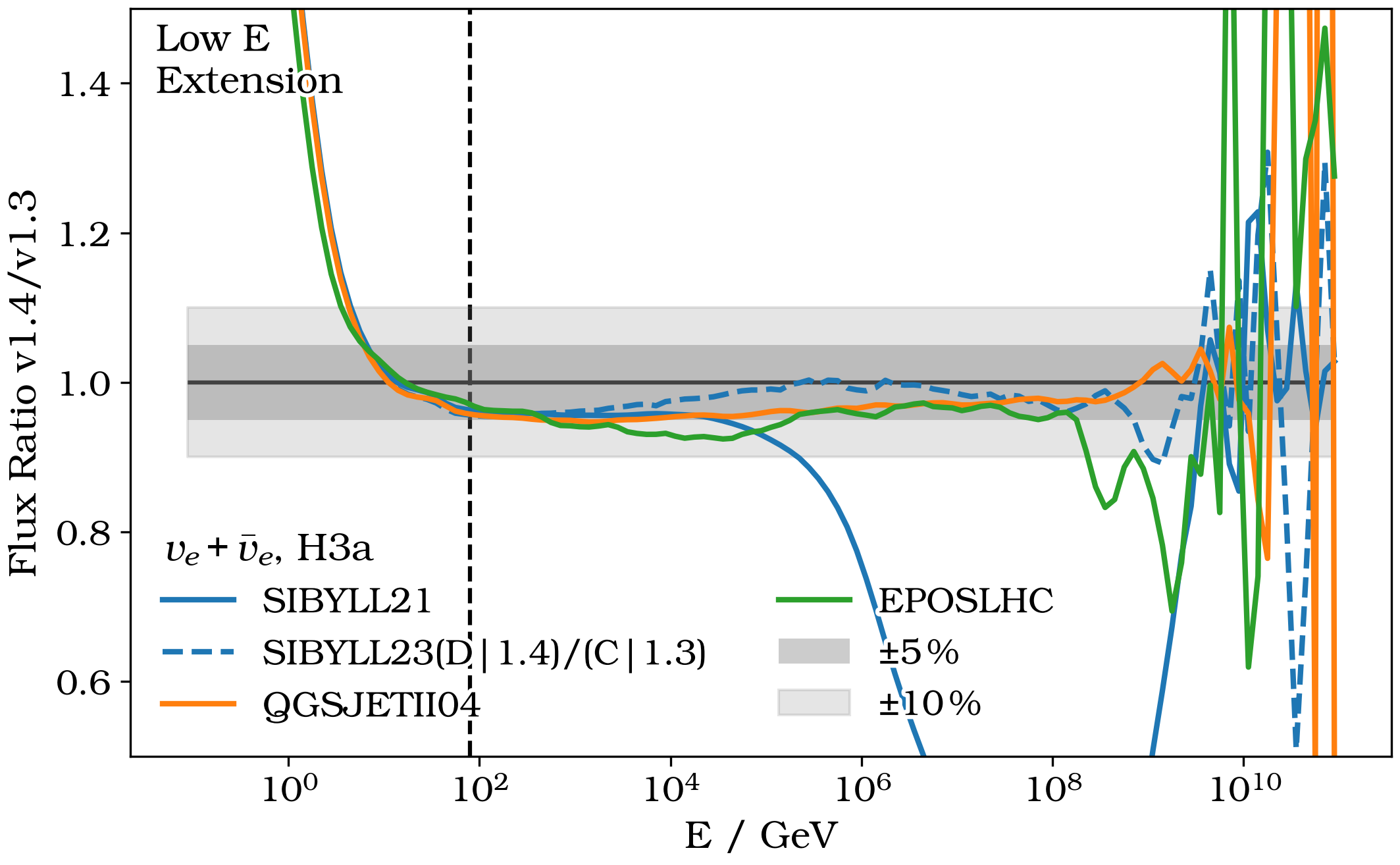
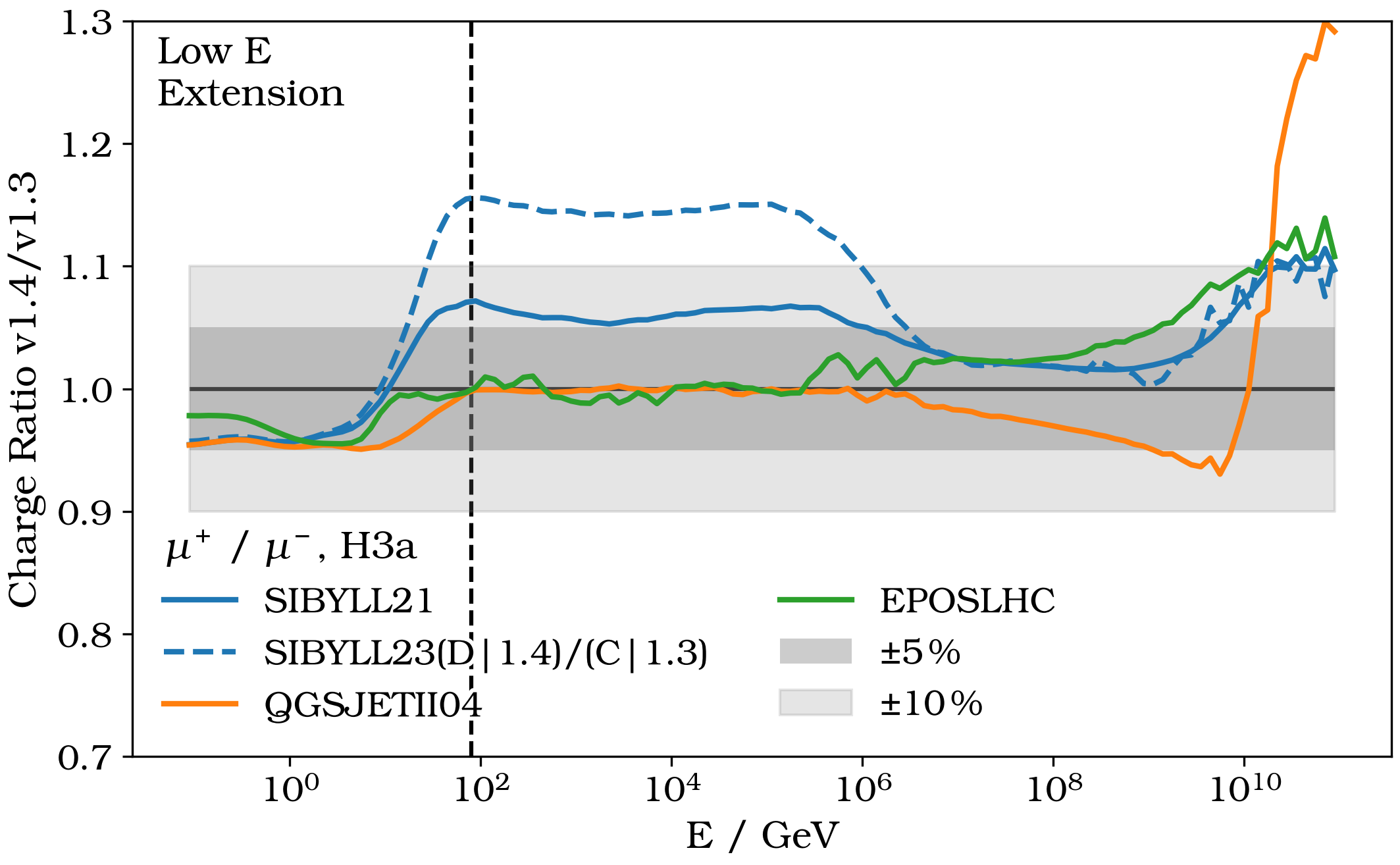
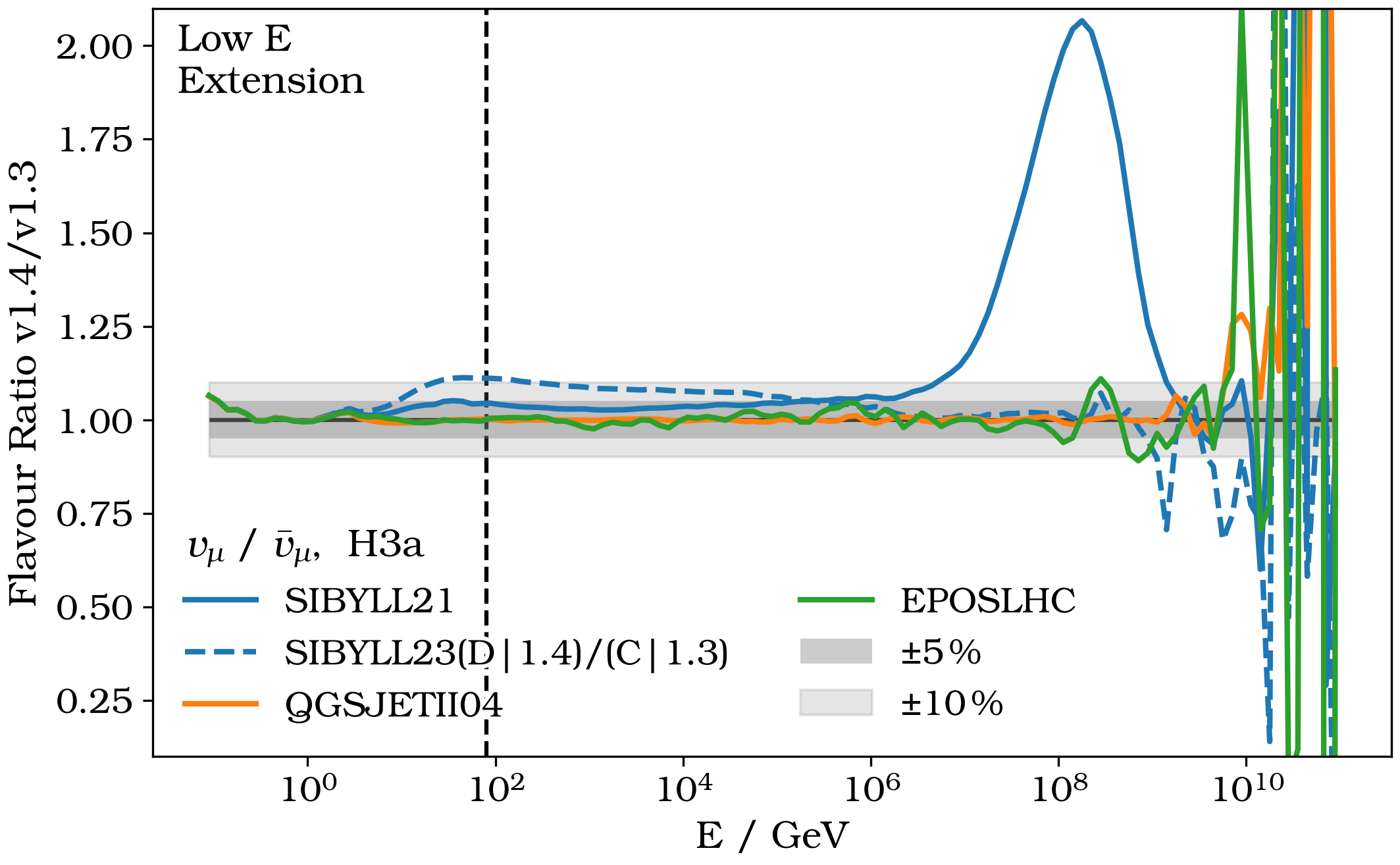
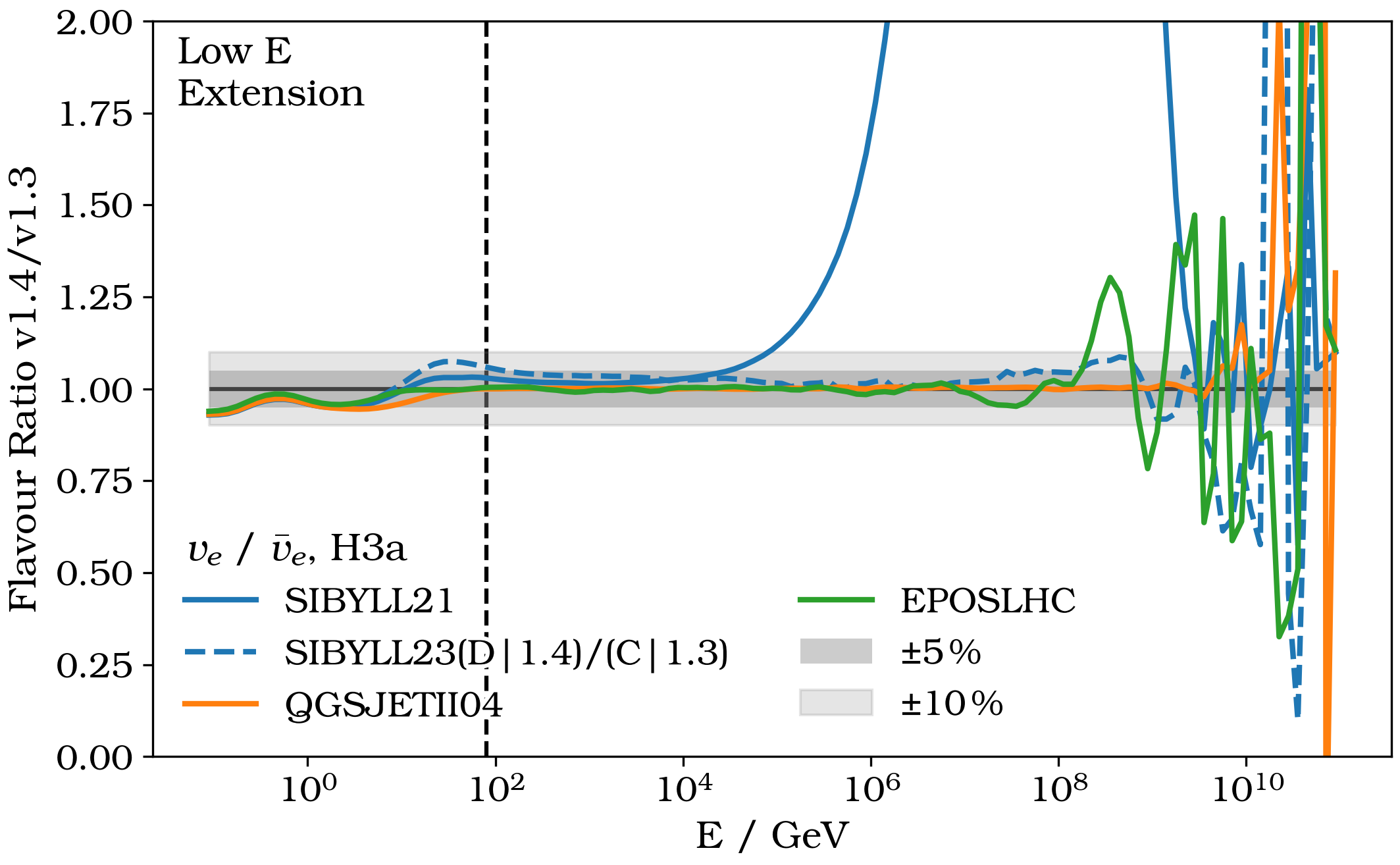
In the following we compare the aforementioned baseline models (Sibyll-2.1, QGSjetII04, Epos-LHC) in v1.4 against v1.3. In addition, we compare Sibyll-2.3c from v1.3 with Sibyll-2.3d from v1.4 for completness since it is no longer part of the database.
These resulting ratios are impacted by the above listed changes.
SIBYLL21: The drastic change you can see here results from previous mixup of particle IDs.
Low E Extension: Within this region (below 80 GeV) all models are extended with DPMJetIII. The new database uses DPMJetIII-19.3 instead of DPMJetIII-19.1.
Ultra High Energies: Towards 1e9 GeV and above the ratio is dominated by statistical flucations from the Monte Carlo generation of the hadronic interaction matrices at high projectile energy.
Lepton Fluxes#
Lepton Charge and Flavor#
New Model Fluxes#
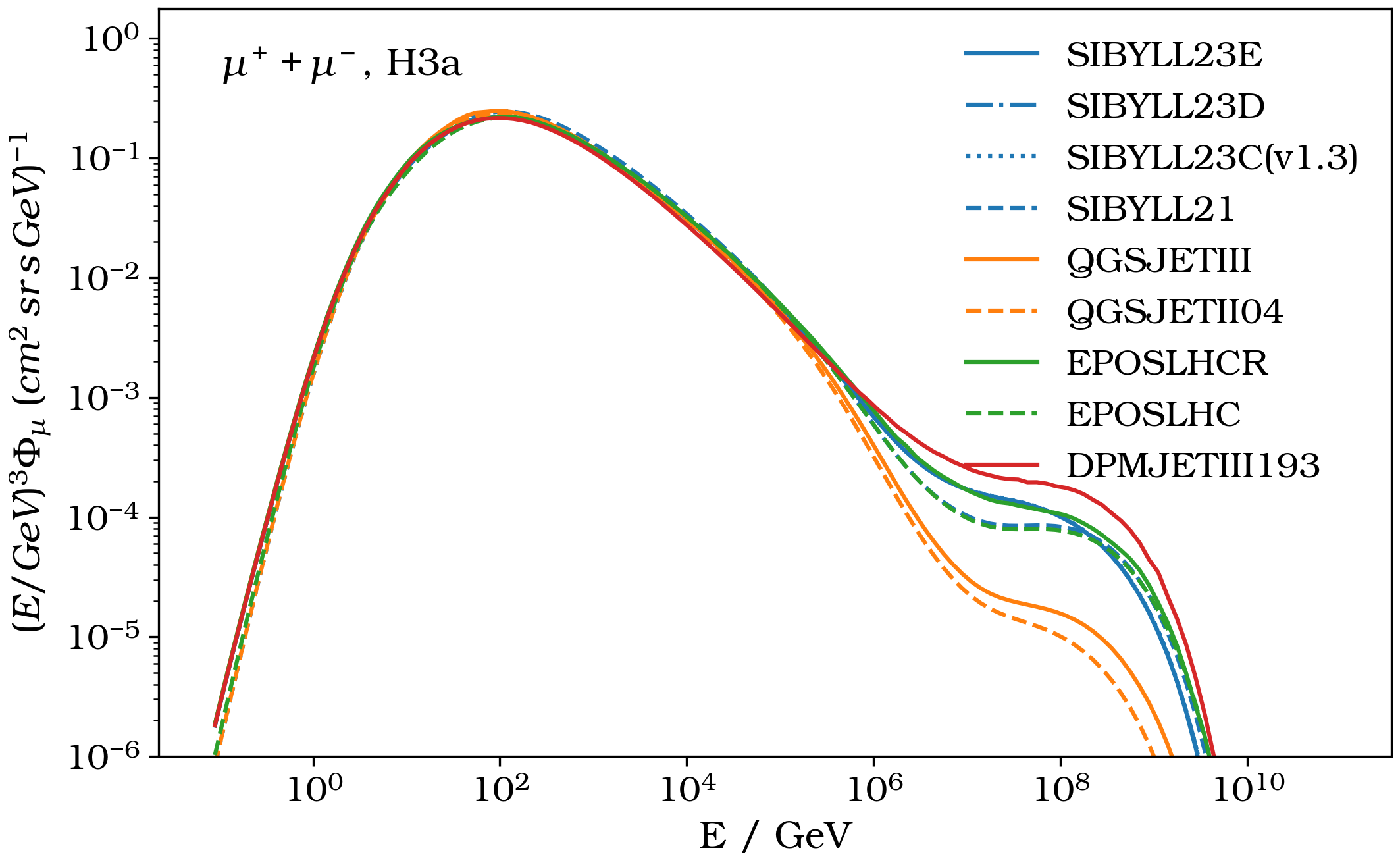
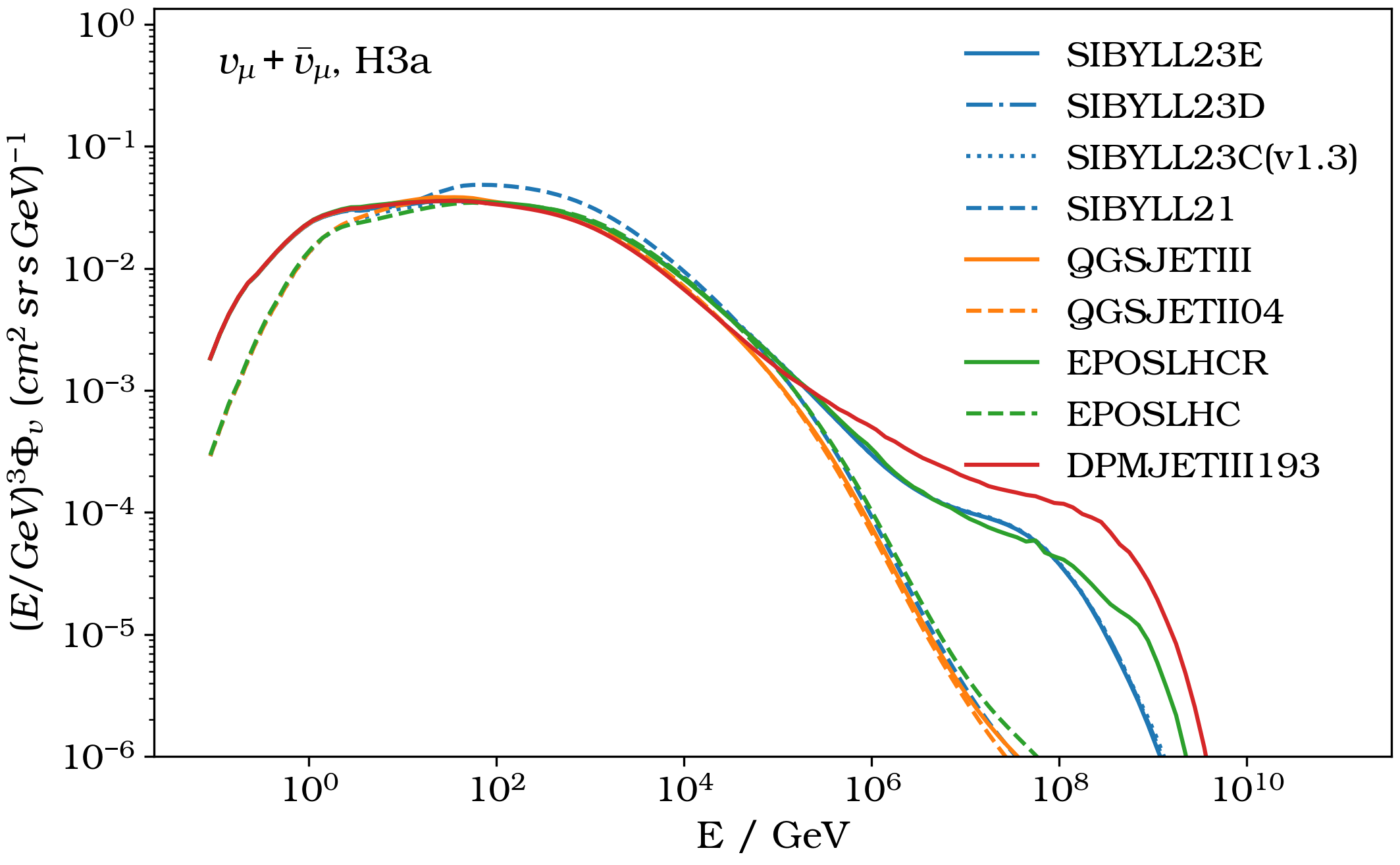
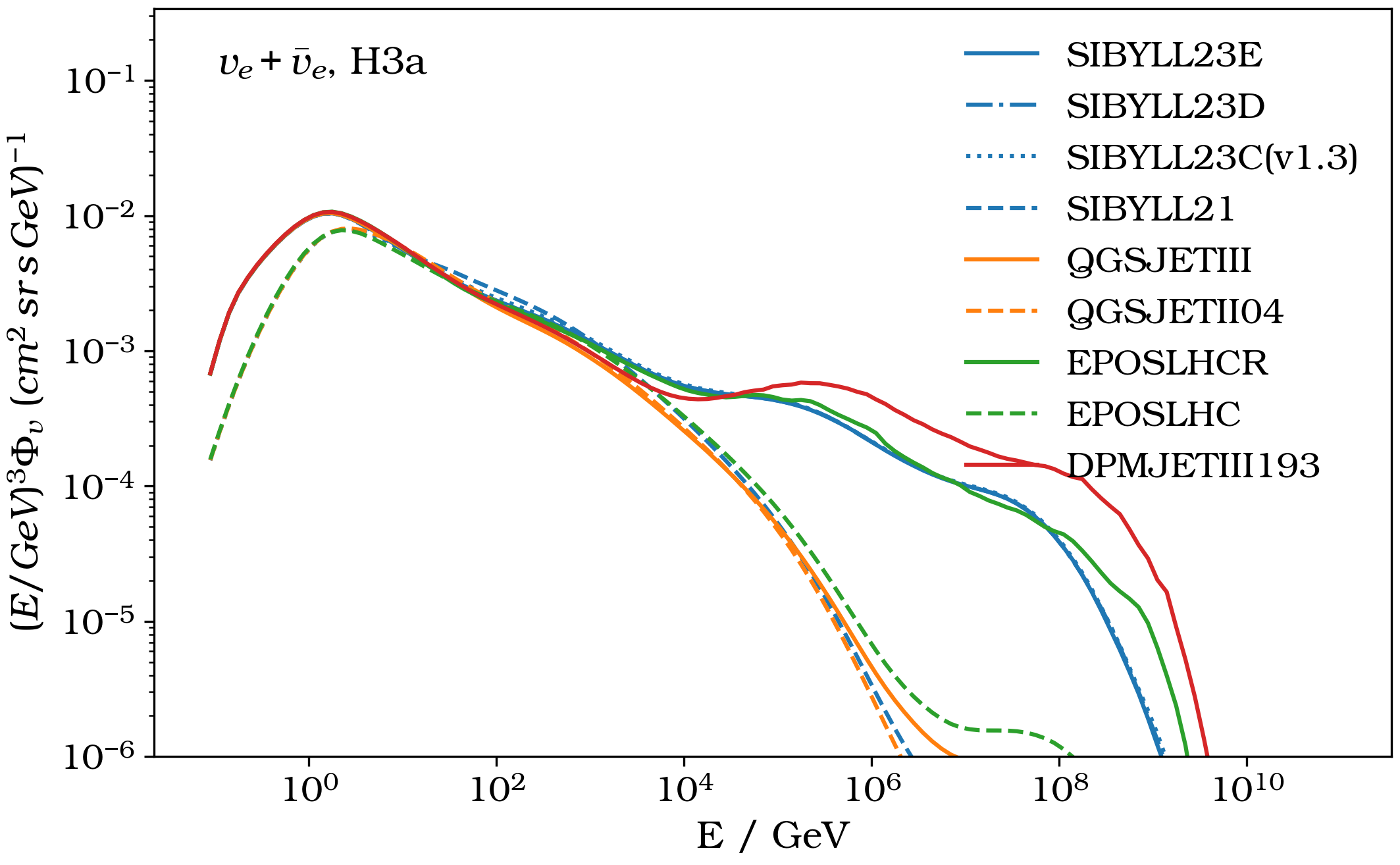
In this section you can find the lepton fluxes of all new and old models.
Contact#
We track various changes in much more detail. If you encounter any problems, please contact Stefan.